Side Sleeper, Back Sleeper, or Stomach Sleeper? How CosBed Supports Different Sleep Positions
Different Sleep Positions Need Different Pillow Support
Some people sleep on their side. Others prefer sleeping on their back. Many people change positions throughout the night.
Each sleeping position places different pressure on the head, neck, shoulders, and arms. A traditional pillow usually comes with one fixed height and one simple shape, which may not work well for every sleeping style.
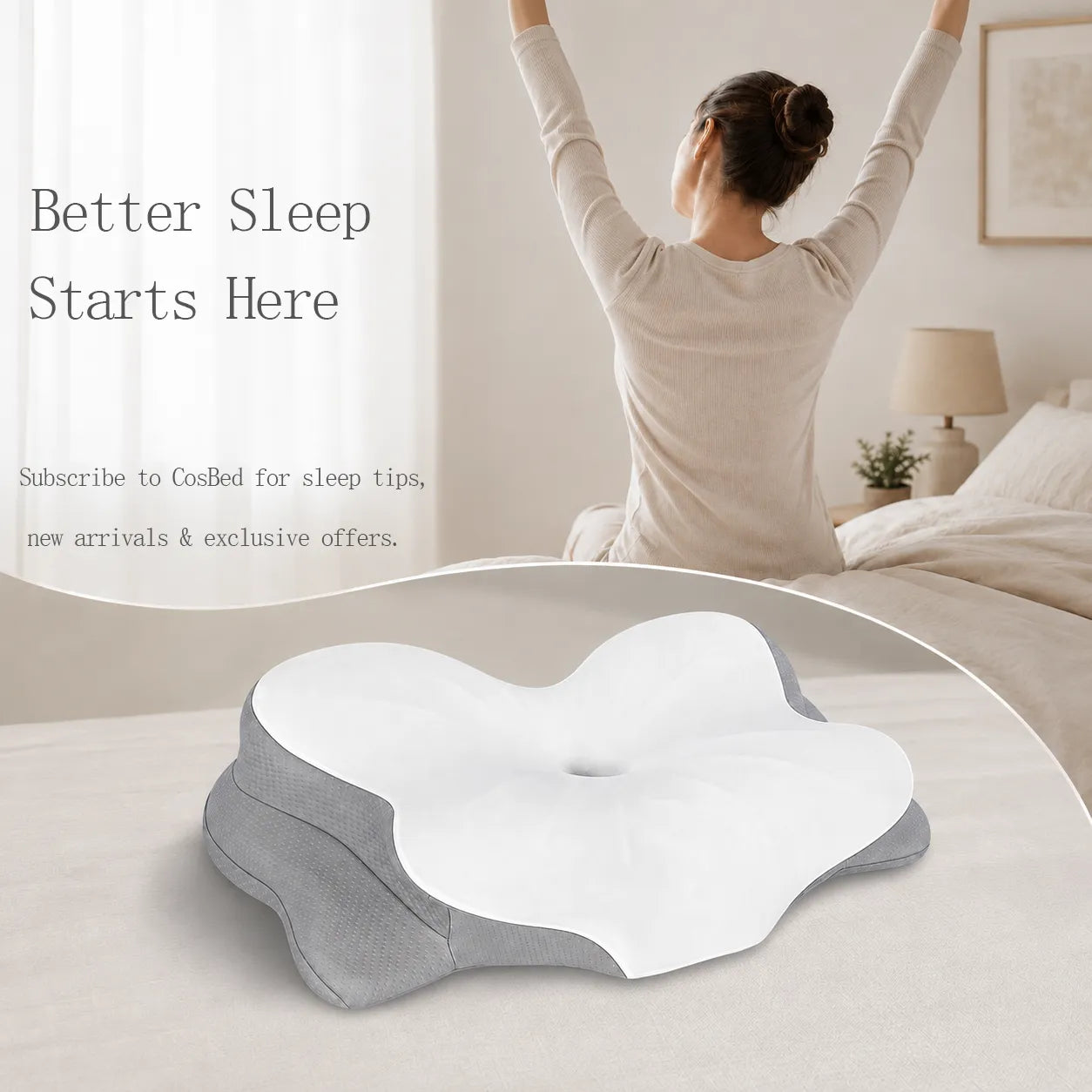
The CosBed Ergonomic Cervical Pillow is designed to support multiple sleep positions with a more flexible and ergonomic structure.
For Side Sleepers: Space for the Shoulders
When you sleep on your side, your shoulder plays an important role in keeping your upper body aligned. If your pillow does not allow enough space, your shoulder and neck may feel compressed.
CosBed features a shoulder positioning area and curved side design to create more space for the shoulder while side sleeping. Your head rests on the main support area, while the curved neck support helps keep your sleeping posture more stable.
For people with broader shoulders or those who prefer side sleeping, the higher side of the pillow, about 5.51 inches, may provide a stronger sense of support.

For Back Sleepers: Centered Head Support and Natural Neck Support
For back sleepers, the goal is not to raise the head too high. The real key is keeping the head stable while supporting the natural curve of the neck.
CosBed’s center hollow helps guide the head into a more centered position, reducing unnecessary shifting during sleep. The curved cervical support area helps support the neck more naturally.
Back sleepers can choose between the lower or higher side depending on their personal comfort preference.
For Stomach Sleepers and Combination Sleepers: A Lower Side for Flexibility
Stomach sleepers and people who move frequently during sleep are often more sensitive to pillow height. A pillow that is too high may feel uncomfortable, while one that is too firm may make turning over less natural.
CosBed’s lower side, about 3.5 inches, is a better option for those who prefer a lower pillow or often change positions during the night.
The slow-rebound memory foam gently adapts to pressure, helping create a smoother transition between sleeping positions.

Arm Support Areas for a More Relaxed Sleeping Position
Many side sleepers naturally place their arms near or around the pillow. Some may even feel uncomfortable when their arms are left unsupported.
CosBed includes arm support zones on both sides, giving your arms a more natural place to rest. This makes it especially useful for people who enjoy a side-sleeping or pillow-hugging position.
Why Slow-Rebound Memory Foam Matters
A pillow that is too soft may sink too much. A pillow that is too firm may feel uncomfortable.
Slow-rebound memory foam offers a balance between softness and support. CosBed’s memory foam adapts gradually to the shape of your head and neck while helping the pillow maintain its structure.
For anyone looking for both comfort and stable support, this material offers an advantage over many standard filled pillows.
Breathable and Washable for Long-Term Use
Because you use your pillow every night, long-term comfort and cleanliness matter.
CosBed features a breathable, removable pillowcase that is easy to take off and clean. This helps keep your sleep environment fresher and makes the pillow more practical for everyday use.
Final Thoughts: One Pillow for More Sleep Styles
The design idea behind CosBed is simple: support different parts of the body with dedicated zones, offer two height options for different sleep preferences, use slow-rebound memory foam for comfort and stability, and add a breathable washable cover for everyday convenience.
Whether you sleep on your side, your back, your stomach, or change positions often, CosBed helps you find a more comfortable and supportive way to rest.
A better sleep experience can begin with choosing the right pillow.